
Loading
Handcrafted Metalware Manufacturing Built for Commercial Scale

Handcrafted Metalware Manufacturing Built for Commercial Scale

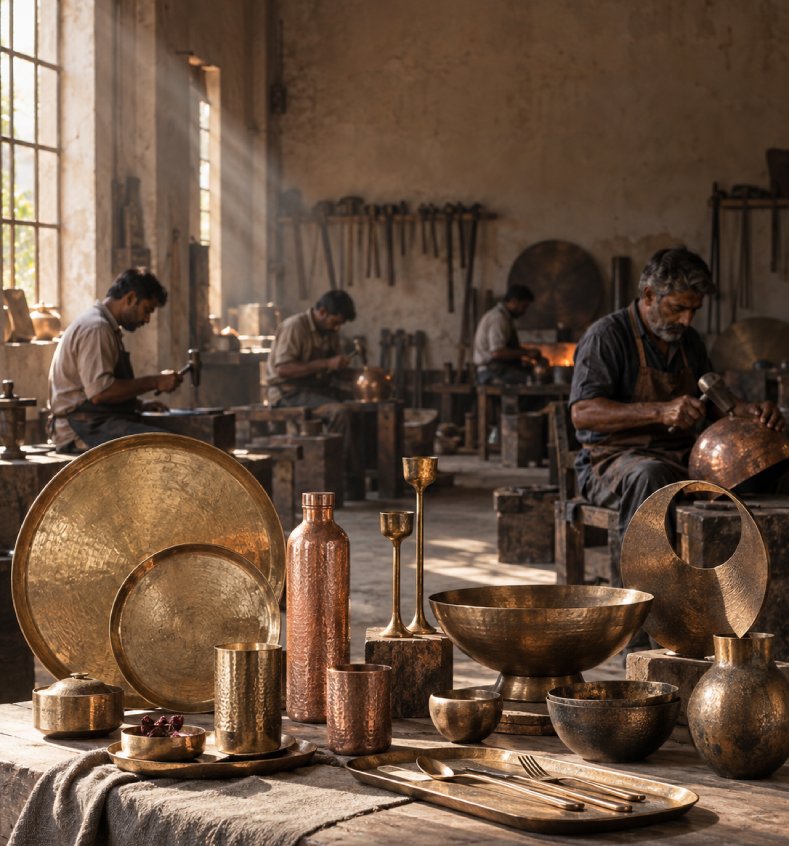
From brass trays and copper bottles to bowls, cutlery, drinkware, candleware, centrepieces and decorative objects, Lume Loam brings handcraft and structured production together for trade, hospitality, retail, gifting and commercial requirements.

Our manufacturing approach is built around the material first: how it is formed, hammered, finished, inspected, packed and prepared to remain consistent across a commercial order without removing the character that makes handcrafted metalware worth choosing.

  • Check icon Custom & Made-to-Requirement Production
  • Check icon Trade & Bulk Metalware Orders
  • Check icon Sample Development & Approval
  • Check icon Quality-Controlled Production
  • Check icon Export-Ready Order Preparation
SQ FT Production Ecosystem
Sample Development
Export Markets
Production Specialists

A Manufacturing Ecosystem Designed for Scale

Production Workshops

Dedicated metalworking environments for shaping, hammering, forming, joining, finishing and preparing handcrafted tableware, drinkware, serveware and decorative objects.

Material Processing

Metal preparation begins before the object takes shape. Brass, copper, bronze, tin, aluminium and other approved materials are selected and prepared according to the requirements of the individual product.

Forming & Fabrication

Processes such as hand hammering, forming, casting, fabrication, joining and shaping are selected according to the object's form, material and intended use.

Finishing Operations

Polishing, hammering, texturing, ageing and other surface treatments bring the final character to the object. Finish direction should be agreed before commercial production where visual consistency matters.

Export Packaging

Products are packed according to their size, surface and form so bowls, trays, bottles, carafes, candleware and larger decorative pieces receive appropriate protection during commercial handling.

Multi-Workshop Coordination

Where an order involves different techniques or product families, production planning can coordinate the relevant craft and finishing stages around one approved requirement.

From Technical Brief to Final Export

STEP 01

Technical Review


We begin with the product itself, covering category, dimensions, capacity, intended use, preferred metal, finish, estimated quantity and destination. References, drawings, sketches or inspiration images can also be included where useful.

STEP 02

Product Development & Sampling


Where sampling is required, a piece is developed for review before larger production begins. This allows proportion, weight, surface, colour, finish and overall character to be assessed clearly before moving into the next stage.

STEP 03

Material Preparation


The selected metal is prepared according to the product requirement before forming begins. Material choice is considered in relation to colour, weight, ageing, care, surface finish and the intended use of the completed piece.

STEP 04

Production Execution


The product moves through the relevant making stages based on its form and construction. These may include shaping, hammering, forming, casting, fabrication or joining, while keeping the approved specification consistent across the order.

STEP 05

Finishing & Detailing


Surfaces are refined according to the approved finish direction. Depending on the piece, this may include polishing, texturing, hand hammering, ageing or other finishing work that defines the final visual and tactile character.

STEP 06

Quality Inspection


Finished pieces are reviewed against the approved material, form, dimensions, finish and overall condition. The review also allows for the natural variations that can appear in handcrafted production without changing the intended result.

STEP 07

Packaging & Export


Approved orders are protected and packed according to product form, quantity and destination before dispatch. Shipping requirements, documentation and commercial terms can then be coordinated according to the needs of the order.

STEP 01

Technical Review


We begin with the product itself, covering category, dimensions, capacity, intended use, preferred metal, finish, estimated quantity and destination. References, drawings, sketches or inspiration images can also be included where useful.

STEP 02

Product Development & Sampling


Where sampling is required, a piece is developed for review before larger production begins. This allows proportion, weight, surface, colour, finish and overall character to be assessed clearly before moving into the next stage.

STEP 03

Material Preparation


The selected metal is prepared according to the product requirement before forming begins. Material choice is considered in relation to colour, weight, ageing, care, surface finish and the intended use of the completed piece.

STEP 04

Production Execution


The product moves through the relevant making stages based on its form and construction. These may include shaping, hammering, forming, casting, fabrication or joining, while keeping the approved specification consistent across the order.

STEP 05

Finishing & Detailing


Surfaces are refined according to the approved finish direction. Depending on the piece, this may include polishing, texturing, hand hammering, ageing or other finishing work that defines the final visual and tactile character.

STEP 06

Quality Inspection


Finished pieces are reviewed against the approved material, form, dimensions, finish and overall condition. The review also allows for the natural variations that can appear in handcrafted production without changing the intended result.

STEP 07

Packaging & Export


Approved orders are protected and packed according to product form, quantity and destination before dispatch. Shipping requirements, documentation and commercial terms can then be coordinated according to the needs of the order.

Quality Control at Every Production Stage

Incoming Material Inspection

Incoming Material Inspection

01

Metal and relevant raw materials are reviewed before production so the manufacturing process begins with the correct material specification.

In-Process QC

In-Process QC

02

Products are checked during key stages of shaping, forming, joining and finishing rather than waiting until the entire order has been completed.

Form & Functional Review

Form & Functional Review

03

Products are reviewed around the functional requirements relevant to the object, including overall form, dimensions, stability, fitted components and usable condition.

Finish Inspection

Finish Inspection

04

Hammer marks, polish, surface colour, patina and texture are visually important parts of metalware. Each production order should therefore be reviewed against the approved finish direction while allowing for the natural variation of hand-finished metal.

Packaging Verification

Packaging Verification

05

Packaging is checked to ensure the selected protection suits the shape and finish of the products being shipped. Large trays and centrepieces require different protection from cutlery, tumblers, bottles or smaller table objects.

Final Dispatch Audit

Final Dispatch Audit

06

Before dispatch, the completed order should be checked against the confirmed products, quantities, visible condition and agreed packaging requirements.

Manufacturing for Hospitality, Retail & Commercial Projects

Handcrafted serveware, drinkware, candleware and décor can add warmth to hospitality spaces while supporting practical use, care and replenishment needs.

Bowls, plates, cutlery, trays, carafes and tumblers can shape the dining experience, with each piece considered around use, care and food-contact suitability.

Candelabra, centrepieces, trays, containers and decorative metal objects can add texture, reflection and handcrafted character to commercial interiors.

Trade buyers can build coordinated assortments across tableware, drinkware, serveware and décor with a consistent material and design language.

Multi-location requirements can be planned around shared product families, finish direction, quantities, packaging and staged delivery needs.

Handcrafted serveware, drinkware, candleware and décor can add warmth to hospitality spaces while supporting practical use, care and replenishment needs.

Bowls, plates, cutlery, trays, carafes and tumblers can shape the dining experience, with each piece considered around use, care and food-contact suitability.

Candelabra, centrepieces, trays, containers and decorative metal objects can add texture, reflection and handcrafted character to commercial interiors.

Trade buyers can build coordinated assortments across tableware, drinkware, serveware and décor with a consistent material and design language.

Multi-location requirements can be planned around shared product families, finish direction, quantities, packaging and staged delivery needs.

Export-Ready Manufacturing for Global Buyers

International metalware orders require more than making the object correctly. Packaging, quantities, shipping terms, documentation and destination requirements need to be understood before the order leaves production.

Shipping Coordination

Trade shipments can be planned around the confirmed order quantity, destination, packing requirement and agreed freight responsibility.

Container Optimization

For larger orders, carton dimensions, product nesting and shipment planning can be considered with freight efficiency in mind without compromising required product protection.

Export Documentation

Applicable commercial and shipment documentation should be confirmed according to destination and agreed shipping terms.

Compliance Support

Product, material and shipping requirements vary between markets. Any testing, declarations or buyer-specific compliance requirements should therefore be identified before production rather than assumed after completion.

International Delivery

International buyers can share their delivery destination at enquiry stage so available shipping arrangements and responsibilities can be confirmed before an order proceeds.

Door-to-Door Logistics

Door-to-door delivery should only be quoted where it is available for the relevant destination and order.

Frequently Asked Questions

What types of metalware do you manufacture?

Lume Loam's product range spans bottles, bowls, candelabra, carafes, centrepieces, coasters, containers, cutlery, floaters, jugs, mugs, plates, sake servers, tea lights, thali sets, trays, tumblers and vintage clocks, alongside related handcrafted table and decorative objects. Trade availability should be confirmed for the specific products and quantities required.

Do you offer custom metalware manufacturing?

Custom requirements can be reviewed where an existing Lume Loam product does not meet the buyer's requirement. Share the object type, preferred metal, dimensions, finish, intended use, estimated quantity and reference material so feasibility can be assessed before sampling.

Can you handle larger hospitality and trade orders?

Larger commercial requirements can be reviewed according to the selected product, quantity, material, finish, destination and required timeline. Because a cutlery order and a large hand-formed centrepiece have very different production requirements, Lume Loam should confirm capacity at product level rather than publish one universal volume.

How do you maintain consistency in handcrafted products?

Consistency begins with an approved product reference and clear expectations for material, dimensions, overall form and finish. Handmade metalware can still show small differences in hammer marks, colour, texture, patina, dimensions or weight because those characteristics result from the craft process. The goal is controlled production, not artificial uniformity that removes every sign of the hand.

Do you support international shipping?

International trade enquiries can include the destination country so available packaging, freight and delivery options can be reviewed. Exact shipping responsibilities, duties, customs requirements and Incoterms should be agreed before the order is confirmed.

What are your production lead times?

Lead times depend on product type, quantity, raw material requirements, finish, sample approval and production schedule. A confirmed lead time should therefore be supplied after the order specification is understood rather than using one timeline for every product.

Can samples be developed before bulk production?

Yes, sample development should be available for products where physical approval is required before a larger commercial order. A sample helps the buyer assess scale, material, weight, finish, surface texture and overall craftsmanship before confirming production.

Do you provide export documentation?

Export documentation support should be confirmed according to the destination, shipping method and commercial terms of the order.

Let’s Build Your Next Metalware Collection.

Whether you require a focused group of handcrafted table pieces, a hospitality order, a retail assortment, a gifting requirement or a custom metal object, begin with the products and quantities you have in mind.